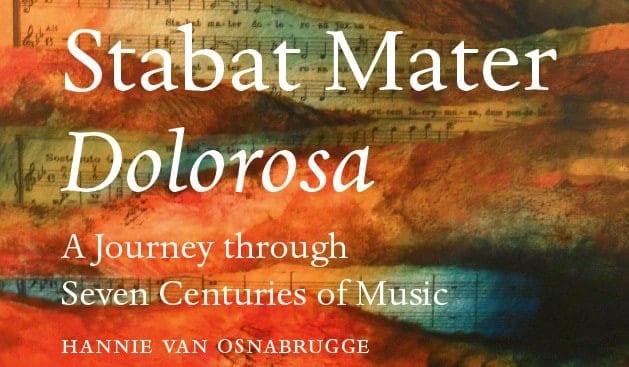

We are thrilled to announce the international release of Stabat Mater Dolorosa – A Journey Through Seven Centuries of Music. Originally published in Dutch in 2022, this unique book is now accessible to readers worldwide, thanks to the dedicated efforts of volunteers from the Ultimate Stabat Mater Website community. Available on Amazon.
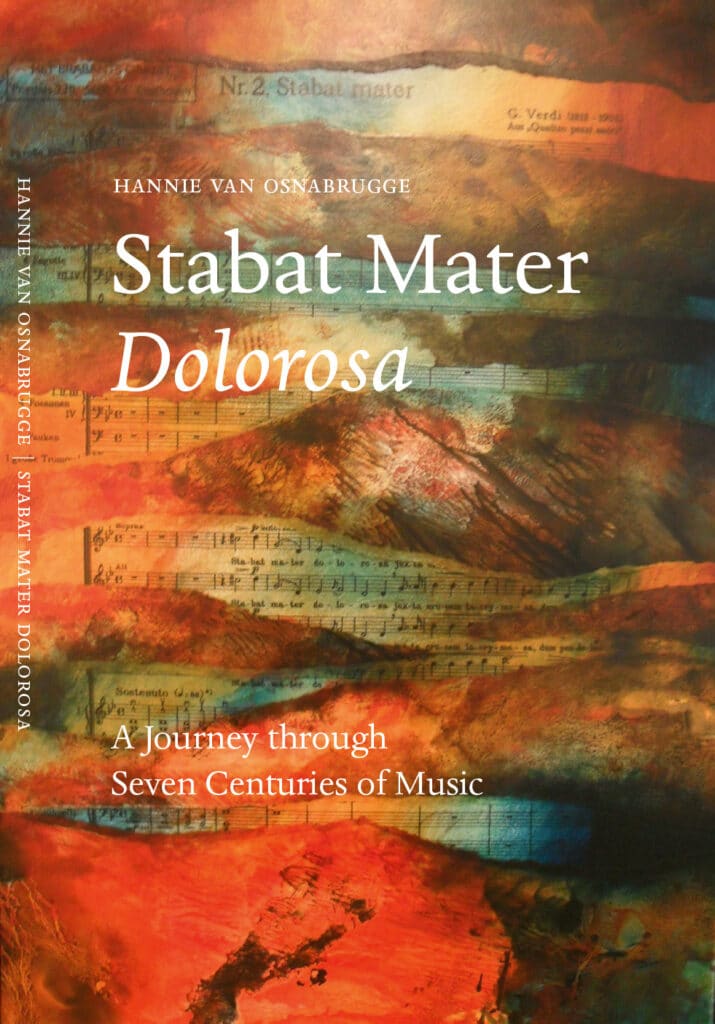
Delve deep into the roots and enduring influence of the Stabat Mater. This thirteenth-century poem has ignited the creativity not only of composers but also that of painters, sculptors, choreographers, authors, poets, and translators.
Over time, the depiction of Mary, shattered and in tears beneath her Son’s cross, has grown to symbolize universal solace for anyone suffering the loss of a loved one.
Van Osnabrugge’s musical journey began thirty years ago when she discovered Haydn’s Stabat Mater while singing in a choir. Touched by the music, her spouse, Hans van der Velden, initiated the collection of all available Stabat Maters, marking the inception of the international Ultimate Stabat Mater Website.
Stabat Mater Dolorosa takes the reader on a journey to Todi, in Umbria, the presumed birthplace of the poem’s author. The book explores the relationship between the Stabat Mater and the Requiem of Russian poet Anna Akhmatova, and tells of how Van Osnabrugge formed a meaningful connection with a seventeen-year-old English student who translated the Stabat Mater from Latin to German out of pure love for its text and themes.
Through captivating storytelling, the book navigates through historical places, rituals, artworks, and performances, offering readers a rich tapestry of cultural exploration across the centuries.
Join us as we embark on this enchanting voyage through the realms of music, art, and human emotion with Stabat Mater Dolorosa – A Journey Through Seven Centuries of Music.
Now available on Amazon
Search the Ultimate Stabat Mater Website
On the Ultimate Stabat Mater Website you will find the CD-collection of -now- more than 300 different Stabat Mater compositions. Search for composers: alphabetically, chronologically, by country of origin and by duration. Listen to the compositions and watch the videos of special performances. The site also includes translations of the original Latin poem Stabat Mater Dolorosa in 24 different languages. See: Latest additions.
Why this Stabat Mater website?
Initiator of this website, Hans van der Velden, began this journey of musical discovery in 1992 with the Stabat Mater from Haydn. He searched systematically and persistently for composers, performances on cd and translations of the original Latin poem. He brought the religious, literary, and musical world of the Stabat Mater to life. We are proud to continue his work.
Interested?
We hope this site is helpful for music lovers, musicians, and composers! Would you like to learn more? Subscribe to the Newsletter or read the blog. Do you have any information about performances, recordings, video’s, or cds with Stabat Maters? Please, let us know!